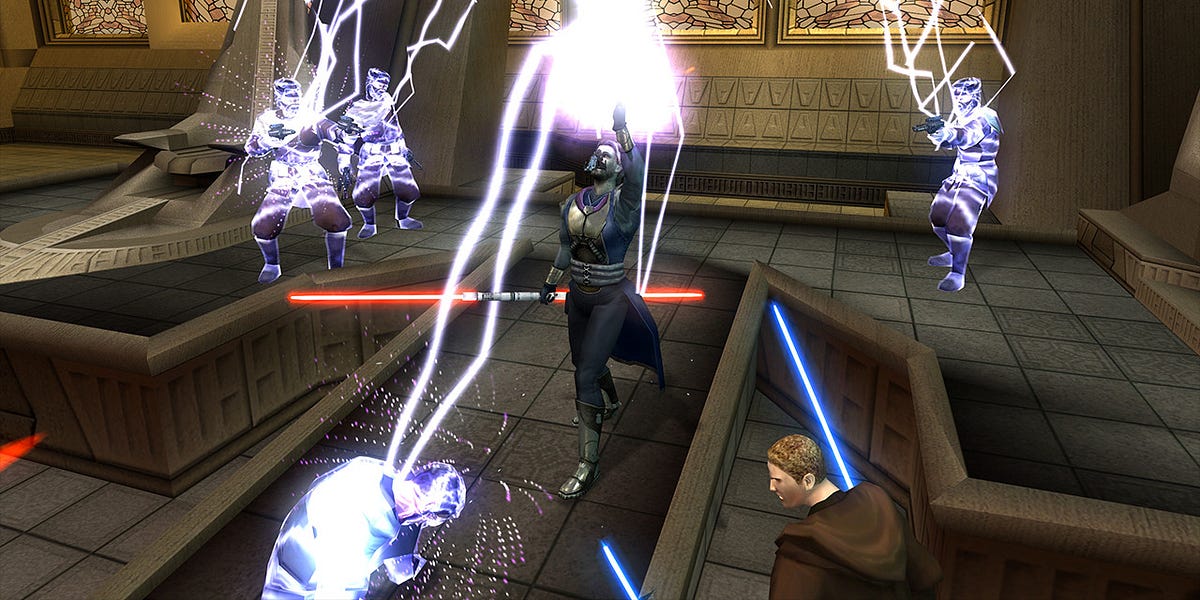
In November 2023, the lawyer representing a gamer in a lawsuit over the alleged false advertising of a Star Wars video game decided to quote the rapper Lil Wayne.
The case was several months old and attorney Ray Kim had been locking horns with lawyers for the game company Aspyr, which had ported the classic role-playing game Star Wars Knights of the Old Republic II to the Nintendo Switch in mid-2022 but then, a year after release, cancelled a key expansion to the game.
Aspyr’s lawyers had taken issue with how Kim was handling the lawsuit, which they argued should have been withdrawn. They asked a judge in California’s Central District Court to sanction Kim and pay their legal fees.
Kim shot back with a filing that began as follows:
“Tunechi, a.k.a. Lil Wayne, once declared, “Okay, you’re a goon, but what’s a goon to a Goblin?? Nothin. Nothin. You ain’t scaring nothing.”
Kim, a former corporate lawyer whose website positions him as a converted defender of the people, helpfully broke his metaphor down.
Aspyr “and its counsel are the goons,” he explained in the filing.
“In turn,” he added, he and his client “are the goblins, and they will not be deterred.”
Two years later, earlier this fall, Kim and those so-called goons agreed to a settlement. Their agreement ended a strange—and largely unreported—legal battle that at least tinkered with the question of whether a gamer can hold a game company legally liable for not delivering on a feature promoted in a pre-release trailer.
What began as one lawsuit spawned a second, over the alleged false advertising of a “Restored Content DLC’ for the Switch edition of KOTOR II.
Along the way, the lawsuits produced a trove of internal communications among Aspyr, fan modders and Star Wars rights-holder Disney/Lucasfilm Games that answered the central mystery of the Switch’s missing KOTOR II DLC: How does a feature like that make it into an announcement trailer and then get cancelled a year later?
Last week, Game File covered just what happened, how the DLC plan fell apart between 2022 and 2023, despite multiple attempts to make it happen.
Today… the rest of the story: the legal battle itself.
The 2 ½ year conflict was its own twist-filled drama. It pitted a Lil Wayne-quoting lawyer against attorneys who would try myriad arguments to say that KOTOR II Switch players, who already got make-good codes for other Star Wars games, didn’t have standing to sue over a trailer’s undelivered tease. Or if the gamers could sue, they claimed, there certainly shouldn’t be a class action lawsuit open to thousands of gamers.
Lawyers for the game company, Aspyr, argued that the tease for the DLC couldn’t have been widely seen because it ran at the end of a YouTube trailer.
One of the gamers suing them, they said, was problematically fixated not just on financial compensation but on “justice.”
In business terms, one of their experts said, a free fan-made mod—which was what the cancelled KOTOR II DLC was going to be—had “no economic value.”
Aspyr’s lawyers would make their case while initially masking Disney’s role in blocking the DLC. Later, they tried to block the gamers’ lawyers from belatedly adding Disney/Lucasfilm Games to the case (they were partially successful).
The lawsuit went places: here, a colorful accusation of demonic possession; there, a claim that it could take decades to learn who to email to get the rights to make a Star Wars video game.
The saga now appears to be complete. All but its opening chapters have never been reported on, until now. Here’s how it went…