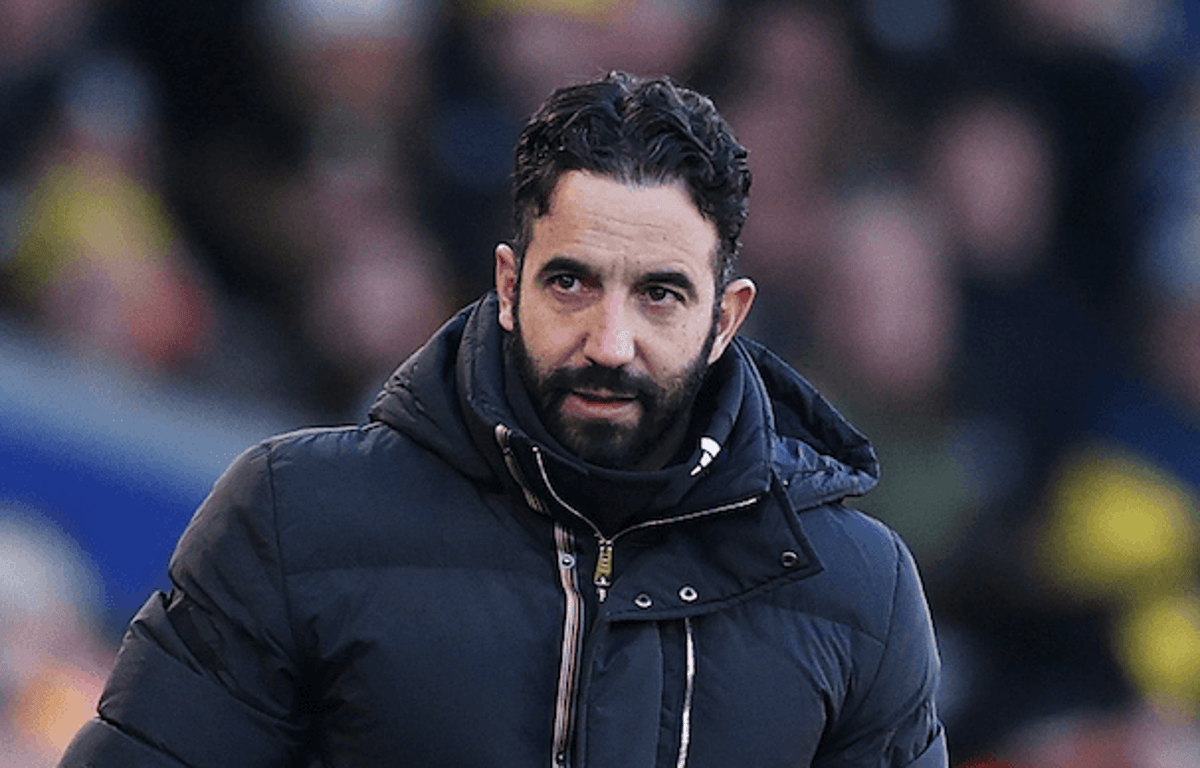
The Portuguese’s final game of his 14-month spell in charge was the 1-1 draw against Leeds United on Sunday that leaves them sixth in the Premier League after 20 matches.
Former midfielder and current Under-18s coach Darren Fletcher will take charge on a interim basis with his first game being away at Burnley on Wednesday night. A permanent appointment is likely to wait until the summer.
The decision has been arrived at by the club’s leadership team, including chief executive Omar Berrada and director of football Jason Wilcox, after a breakdown in relations behind the scenes.
As per the terms in the deal Amorim signed to leave Sporting CP for United in November 2024, there is no clause present to enable a discounted exit meaning United will have to pay up his contract in full. It was set to run until 2027 with the option of a further year.
Following The Athletic’s story a club statement officially announced Amorim’s departure saying the decision had “reluctantly” been made because it is “the right time to make a change” to “give the team the best opportunity of the highest possible Premier League finish.”
“The club would like to thank Ruben for his contribution to the club and wishes him well for the future,” the statement added.
Speaking after the draw at Elland Road, Amorim hinted at tensions with those working alongside him, making clear in his post-match press conference that he considered himself the “manager” of United, not the “coach”.
“It’s going to be like this for 18 months or when the board decide to change,” Amorim added. “That was my point, I want to finish with that. I’m not going to quit. I will do my job until another guy is coming here to replace me.”
Amorim has been criticised for his perceived tactical inflexibility during his time at United, due to his preference for a 3-4-3 set up. However, The Athletic reported in December that United had been trialling other formations in training. Against Newcastle United on December 26, Amorim’s side recorded a 1-0 win playing in a 4-2-3-1, before reverting to the 3-4-3 and drawing 1-1 against Wolverhampton Wanderers four days later.
Speaking before the Leeds game, Amorim hinted at differences of opinion relating to the 3-4-3 formation and an inability to sign the players his preferred system requires. He again set his team up in the 3-4-3 against Leeds.
United paid €11million (£9.25m; $11.95m) to hire Amorim from Sporting, where he won the Primeira Liga title in 2021 and again in 2024 while also winning the Taca da Liga — the Portuguese League Cup — on two occasions. Amorim succeeded Erik ten Hag, with the Dutchman leaving after two and a half years in charge at Old Trafford.
United went on to suffer their worst-ever Premier League season, finishing 15th with just 42 points — their fewest in a top-flight season since they were relegated in 1973–74.
They went out of the FA Cup in the fifth round at the hands of Fulham, suffered a Carabao Cup exit at the quarter-final stage after losing to Tottenham Hotspur and reached the final of the Europa League, only to lose to the north London side again. Defeat by Spurs in Bilbao sealed a first trophyless campaign since 2021-22 and ensured they failed to secure European football for the first time since 2014.
United spent more than £200million ($269m) on new signings during the 2025 summer transfer window, with Benjamin Sesko, Bryan Mbeumo and Matheus Cunha all arriving for fees above £60m. Goalkeeper Senne Lammens also arrived from Royal Antwerp in an £18.2m deal on deadline day.
This season United endured their worst opening to a campaign since 1992-93, managing only seven points from their opening six Premier League games.
The Athletic reported in September that co-owner Sir Jim Ratcliffe had flown in to the team’s Carrington training ground for a series of meetings, including with Amorim, with the team’s form on the agenda.
Following the embarrassing Carabao Cup exit at the hands of League Two Grimsby Town in August, Amorim himself called his future into question saying “something has to change” and that the club’s players “clearly showed what they want”. He went on to say later that week that “sometimes I hate my players, sometimes I love my players”.
Amorim was previously in contention to replace Jurgen Klopp at Liverpool before Arne Slot ultimately got the job and also held talks over replacing David Moyes at West Ham, before later apologising and calling the meeting “a mistake”.
United have had six permanent managers since Sir Alex Ferguson retired in 2013 and have finished no higher than second in that time, achieved by both Jose Mourinho (2017-18) and Ole Gunnar Solskjaer (2020-21). The club have spent more than £50million ($67m, €57m) on removing managers since Ferguson left the role.
How it came to this
Analysis from Manchester United correspondent Laurie Whitwell
Amorim’s status at United has been questioned at several points in his tenure, not least by him, but his comments at Elland Road were on another level and have triggered his exit.
To this stage, Amorim has called out his players and himself, but this was his first time he turned his sharp tongue on the powers above. He was revealing tensions behind the scenes, which have been building in recent weeks over selections, transfers and results.
Amorim effectively called on United’s hierarchy to back him or sack him, and Ratcliffe has chosen the latter. The decision was taken in conjunction with the Glazer family, who own the majority of United shares.
Amorim was appointed head coach by United, a departure from the club’s managerial tradition, due to a restructuring by Ratcliffe, so that reference alone rang alarms at Old Trafford.
He appeared to be stating he still deserved to have control over his area of the club, such as selections, delineating other responsibilities to recruitment and Wilcox, as director of football.
Friction has emerged in recent weeks over style of play. Wilcox is known to have discussions with Amorim over formations and tactical choices. Their relationship has previously been seen as strong, but the tone of Amorim’s words demonstrated a change.
Amorim shifted from his back-three dogma against Bournemouth and Newcastle United, but reverted to his 3-4-2-1 system for the draw with Wolves, which drew criticism from Gary Neville.
United’s draw at Elland Road saw Amorim persist with a back-three, with his line-up featuring only two attacking players in Benjamin Sesko and Matheus Cunha, with Joshua Zirkzee on the bench. The 1-1 result meant United have picked up 13 points from their last nine games in what has been a run of relatively modest opponents — even though they remain in sixth and in touching distance of the Champions League qualification places.
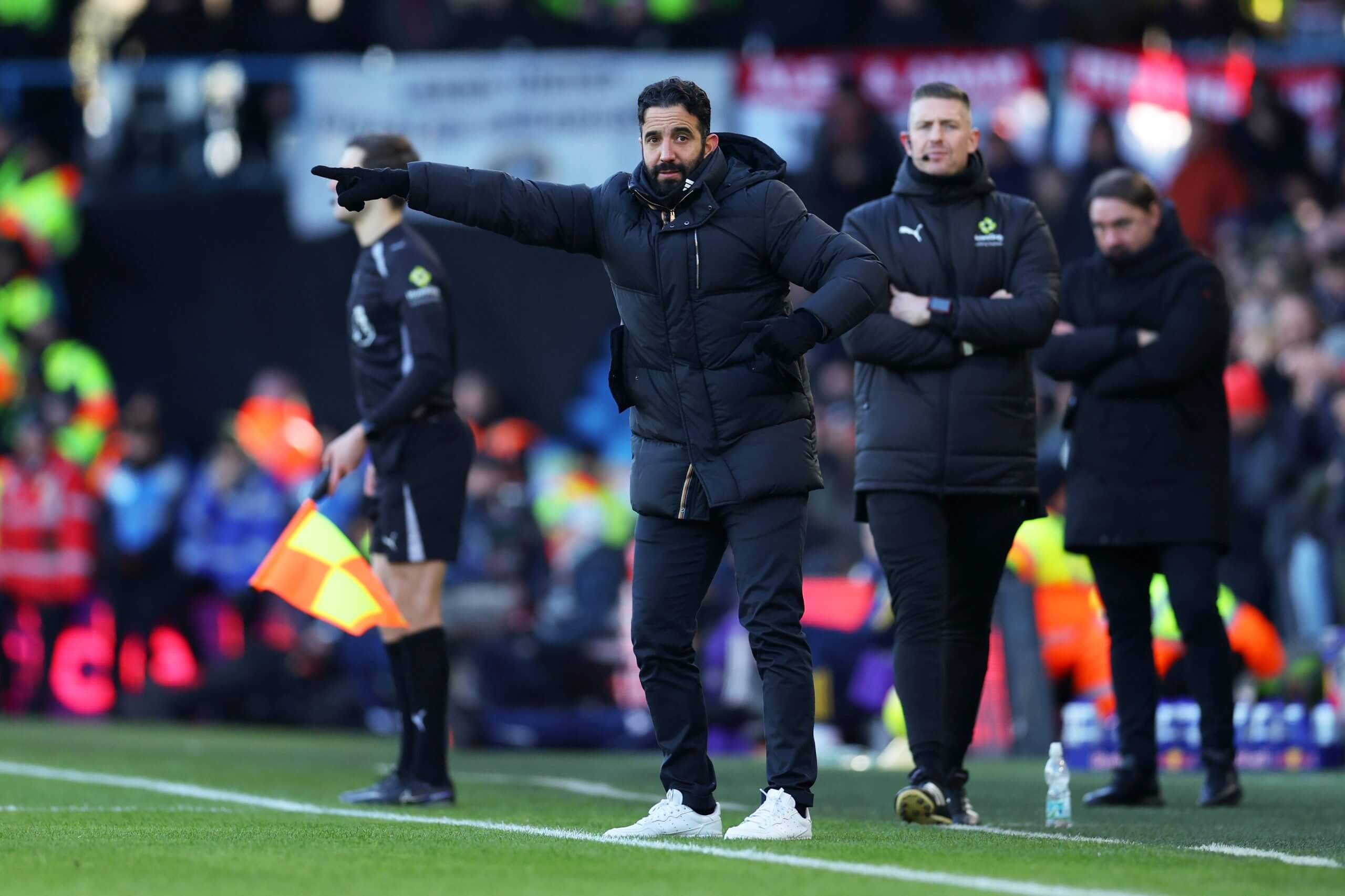
Amorim again used a back three in Sunday’s draw at Leeds (Molly Darlington/Getty Images)
Allied to issues over systems is United’s January transfer activity, which Amorim was frustrated over. United failed in a move to sign Antoine Semenyo from Bournemouth.
Amorim’s departure raises major questions for Ratcliffe’s running of United, given his reign lasted just 14 months and has ended in acrimony. Chief executive Berrada advocated for Amorim’s appointment when the club’s hierarchy discussed replacements for Erik ten Hag in October 2024, feeling his charisma and pedigree in winning two Portuguese titles was a good fit for United.
Dan Ashworth, then sporting director, proposed alternative names with Premier League experience, and warned of the difficulties of implementing a new formation on the squad available.
As The Athletic has previously reported, Wilcox also expressed reservations about whether a back-three would work at United, or in the Premier League more generally. Wilcox got on board with the choice of Amorim, however.
Despite Amorim’s emotional outbursts, Ratcliffe, Berrada, and Wilcox have continued to support Amorim. Ratcliffe is known to express his opinions of the team. Recently, though, that dialogue has come to be seen as interference in Amorim’s eyes.
Fletcher had been a first-team coach under Ten Hag but moved to take charge of United’s under-18s last summer, with his role in Amorim’s set-up reduced. The under-18s have enjoyed a successful season to date, with Fletcher attracting positive reviews from players.
The Glazers will be studying developments closely, having given Ratcliffe the reins but still retaining overall power.
‘Amorim exit raises questions for INEOS’
Analysis from Manchester United correspondent Mark Critchley
Ratcliffe had previously said that Amorim deserved three years to prove himself in the role. That interview, with The Times Business Podcast, was released less than three months ago.
If that illustrates just how quickly Amorim’s level of support within the club has deteriorated, and how rapidly his relationship with the hierarchy has broken down, then it also raises questions about INEOS’ judgement.
Amorim’s loyalty to his 3-4-3 system was hardly a secret. Concerns regarding its adoption had led United to look elsewhere and pursue other candidates at the end of the 2023-24 season, while deliberating Erik ten Hag’s future.
Yet five months later, Ten Hag was sacked and Amorim was his chosen successor. Delaying Ten Hag’s departure forced a mid-season appointment, something Amorim admitted would not have been his preference.
And then within weeks of his arrival, he saw another INEOS hire dismissed in sporting director Dan Ashworth, who had recommended Premier League-based alternatives to Amorim.
Amorim’s appointment will now rank alongside the Ten Hag and Ashworth episodes as INEOS’ biggest mis-steps since taking the reins at Old Trafford.
It is certainly the most publicly explosive, after Amorim demanded his superiors give him the level of control and authority he believed he was due, exposing tensions over his system and the club’s ability to sign players it requires in the transfer market.
On becoming a minority owner in United, Ratcliffe insisted that INEOS and the Old Trafford leadership would decide the style of play and that the coach would have to play it. “In modern football, you need to decide what’s your path and stick to your path,” he added.
And yet having appointed a manager with a defined, fixed system, then invested £242million in his playing squad, and backed his judgement on cutting ties with the likes of Marcus Rashford and Alejandro Garnacho, they have now had to accept they must change course.
Amorim, for the most part, stuck to his path. It is partly why he has lost his job. Quite what path United’s ownership will now head down, almost two years since Ratcliffe’s minority ownership was confirmed, will be fascinating.