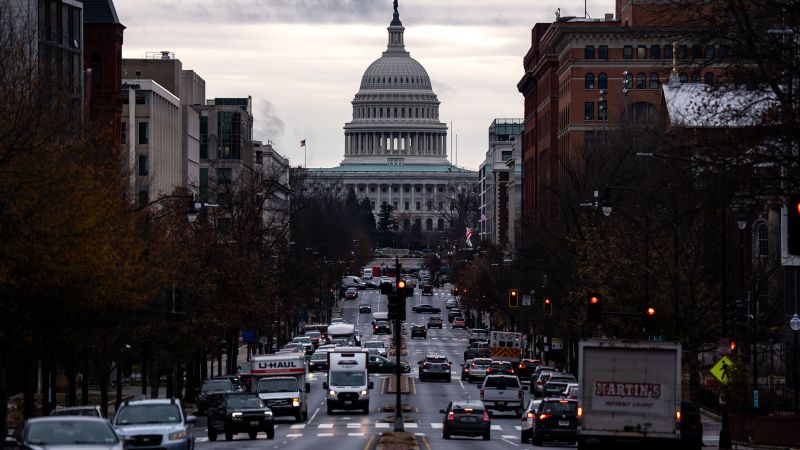
Congress was already set to return this week to a slew of bitter policy fights and the threat of another government shutdown at the end of the month.
Now, lawmakers must confront enormous questions of authority and oversight over the US military after President Donald Trump seized and deposed Venezuela’s Nicolas Maduro without telling them.
House Speaker Mike Johnson and Senate Majority Leader John Thune will be forced to answer from some in their own party over whether to reassert the legislative branch’s role in war-making alongside critical votes on health care and government spending.
They face high stakes ahead of this fall’s midterms, as fury builds among GOP moderates whose political survival this November will determine the trajectory of Trump’s last two years in office.
In the House, Johnson is required to hold a floor vote on a Democratic proposal to resurrect those subsidies for three years, thanks to a rebellion from some of his own GOP centrists, who were irate over the expiration of tax credits that were going to millions of Americans. A Democratic leadership source said the bill has to come up this week under discharge petition rules.
Even if the House passes the bill to extend the credits, that doesn’t mean the Senate will do the same.
Senate centrists have been working on their own compromise bill for weeks, including during their winter recess. But their plans are a secret for now.
The Senate is set to vote on a measure to limit the president’s war powers in Venezuela. The vote had been in the works weeks before Maduro’s late-night capture and now becomes a major test of Republican loyalty to Trump after the operation.
Party leaders must also find a path to fund much of the federal government by month’s end. As lawmakers ended America’s longest-ever government shutdown in the fall, they punted most of the decisions on funding to January 30. That deadline is now fast approaching — but with very little of the progress that spending leaders had hoped to show by now.
And Democrats don’t appear to be in the mood for dealmaking.
“Nobody wants to compromise,” longtime Democratic Rep. Emanuel Cleaver of Missouri said just before leaving for the holidays, lamenting a broken system of governing in Washington that led to the Affordable Care Act subsidies lapse. “And democracy demands compromise.”
Senate Minority Leader Chuck Schumer said Sunday that he and Sens. Tim Kaine and Rand Paul intend to put their war powers resolution on the Senate floor this week in an attempt to rein in the president from further attacks in Venezuela without congressional approval.
Schumer accused Trump of launching an “endless war” — violating Trump’s own campaign promises just months earlier. And he said the White House had yet to reveal how long American troops would be in Venezuela and how much it will ultimately cost.
Kaine said that the Trump administration had not indicated in previous briefings and memos that the purpose of its operation in Venezuela was regime change.
He added that for Congress to intervene and prevent further military actions in Venezuela, lawmakers should pass his War Powers Resolution or include language in the defense appropriations bill prohibiting additional military action.
“Many Republicans said, ‘Oh, the president’s not going to do it. He tells us, this is a bluff. He tells us this is a negotiating tactic,’ etc.,” Kaine told reporters Sunday. “OK, now it’s happening, and anybody who was pretending otherwise cannot pretend anymore.”
Trump administration officials argued Saturday and Sunday that the operation was not an attack against Venezuela but a law enforcement action using military resources that did not require congressional notification.
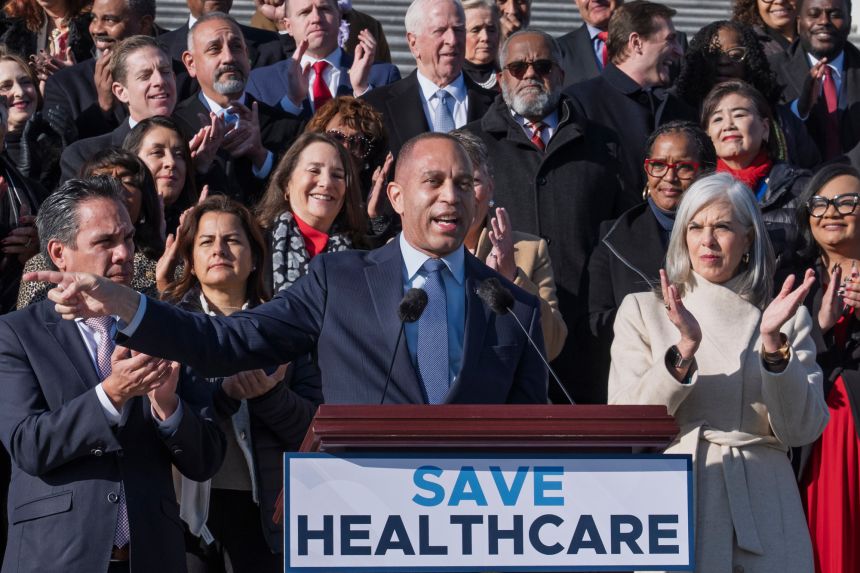
In the coming days, the House is expected to vote – and pass – a bill from House Minority Leader Hakeem Jeffries to fund three years of enhanced Obamacare subsidies, sending the bill to the Senate.
It’s a stunning move for a GOP-led House. Jeffries is only getting his vote because a group of GOP centrists, led by Rep. Brian Fitzpatrick of Pennsylvania, bucked their party to sign onto Democrats’ gambit. (Fitzpatrick and several purple-seat Republicans unsuccessfully lobbied their leadership for months to do something on the issue but never reached an agreement. The centrist Republicans argue they had no other options but to back the Democratic discharge petition.)
It’s not clear how many Republicans will back the bill. That will depend on how strongly GOP leadership whips against it. But as of now, there’s little doubt in either party that the vote will happen this week, according to multiple sources in both parties.
GOP moderates had been trying to convince Johnson to put a compromise bill on the floor in exchange for their promise to nix Jeffries’ bill. But that went nowhere over the recess. Johnson and his team had no formal talks with the moderate crew on this issue over recess, according to one of those sources.
Congressional leaders have just weeks to avoid another funding lapse on January 30. But the two parties still can’t agree on basic tenets of a deal – including topline spending levels.
Spending leaders, known as the “four corners,” have been talking and working with party leaders over the Christmas break, multiple sources said. And in the House, GOP leaders have set an ambitious goal to get spending bills to the floor every week in January, according to one of those people.
But there’s still no agreement between Republicans and Democrats to actually pass the bills. If they make no progress, Congress could see its tide-me-over funding tactic extend for the rest of the fiscal year. That would be an embarrassing defeat for GOP leaders, since it would mean another year of Biden-era funding levels for key parts of the federal government.
There’s another flashpoint besides funding levels: The Senate’s two Colorado Democrats blocked progress on a funding bill in the final days of 2025 as part of an escalating feud with Trump over a climate research center in their home state. It won’t be an easy issue to resolve before month’s end.
On Congress’ final day of session in 2025, a group of lawmakers announced a little-noticed sanctions bill that could mark the legislative branch’s most influential move into the Russian-Ukraine conflict in years.
After weeks of fits and starts, the bipartisan duo of Fitzpatrick and Rep. Greg Meeks of New York is now working to get their compromise Russian sanctions bill to the floor in January. This vote, like the one on Obamacare subsidies, would again bypass the speaker’s powers by using the discharge petition. (Besides Fitzpatrick, three other Republicans are supporting the bill: Reps. Don Bacon of Nebraska, Mike Turner of Ohio and Mike Lawler of New York.)

“Russia won’t negotiate an end to its war unless real pressure is applied on the Kremlin to stop its brutality,” Meeks wrote in a statement in late December. He added that Republicans have also agreed to help advance another Ukraine bill, which would authorize support for the war-torn nation’s reconstruction, also through a discharge petition.
The group is not yet at the 218 signatures necessary to advance: They’re waiting on one more Democrat to sign on, after the results of a Texas special election runoff later this month.