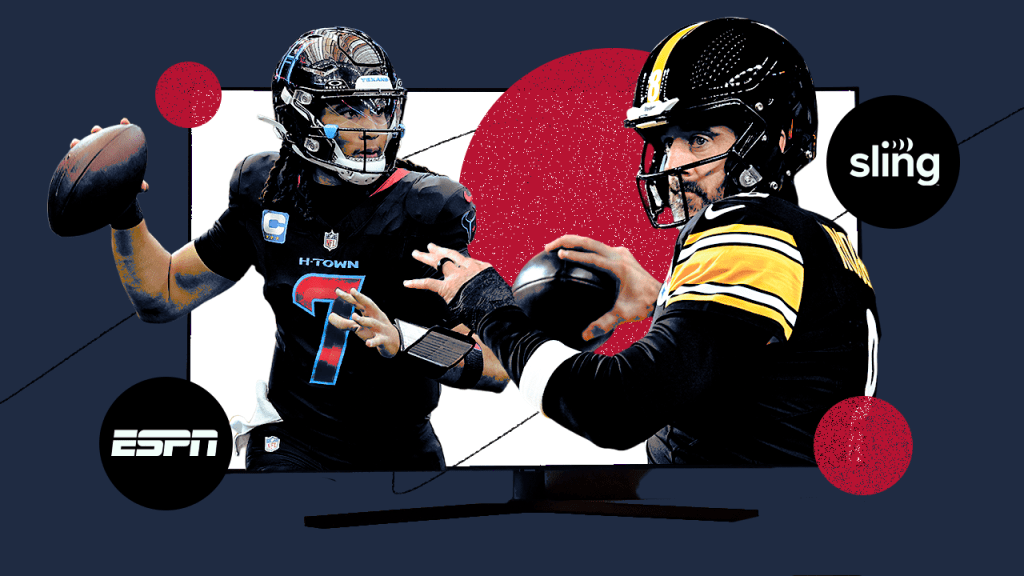
Monday should be one of the biggest days in the young history of ESPN’s $30-per-month direct-to-consumer streaming service as the Pittsburgh Steelers face the Houston Texans to close the NFL‘s wild-card round.
Fans not able to watch Disney-owned ABC or ESPN on traditional TV platforms can turn to the new digital one to catch the action. Streaming options often see signup spikes when offering even non-exclusive NFL playoff action, and this should be no different, given last year’s ABC/ESPN broadcast of Rams vs. Vikings drew an average audience of more than 25 million viewers.
But there’s another relatively new way to watch Monday’s game on the market too: a $5 Sling TV Day Pass, which has been the subject of legal scrutiny—and industry chatter—since its August launch.
As TV has moved online, consumer flexibility and choice have swelled. Long-term contractual commitments have been disrupted by month-to-month cable-like services such as YouTube TV, while large bundles of channels are being displaced by so-called skinny bundles such as Fubo’s sports-specific package.
Sling TV was early to the slimmed-down trend, splitting its offering into Orange and Blue packages, each currently $46 per month. But its newest entry takes things a step (or three) further, letting users buy a single day’s access to Sling Orange—which includes ESPN and 30+ other channels—for $5, three days for $10, or seven days for $15.
If fans sign up for any of those short-term packages Monday, ESPN might not see a dime. The same is true for a day pass timed to next Monday’s college football title game.
Disney sued Sling owner Dish Network over the product in August, within two weeks of its launch. As legal filings have made clear, Sling pays Disney based on the number of subscribers it has on the 21st of each month. People who sign up for a week’s worth of access starting Monday to watch two NFL playoff games seemingly wouldn’t be accounted for (though if someone signed up on the 21st, Sling would presumably pay a month’s worth of fees to Disney).
“Sling TV’s new offerings, which they made available without our knowledge or consent, violate the terms of our existing license agreement,” a Disney spokesperson said at the time of the lawsuit’s filing. Another impacted content owner, CNN and TNT-owner Warner Bros. Discovery, sued Sling shortly thereafter. Sling called the claims “meritless.” The suits are still being adjudicated, with a particular emphasis on what the term “subscription” means in the relevant contracts. A judge denied an injunction request from Disney and WBD in the meantime.
“This is the deal ESPN and Disney don’t want you to know about,” a Sling executive said in a September press release. “Our Day, Weekend and Week Pass subscriptions are just another way we’re fighting to bring customers the programming they want with the flexibility they deserve.”
Last week, Dish Network levied a lawsuit of its own, accusing Disney of illegally tying its products together. Dish argued that it is forced to pay for multiple channels, including less popular programming, if it wants to offer customers access to ESPN, all while Disney itself sells slimmed down packages such as a bundle of ESPN’s direct-to-consumer service and Fox One, or the Disney-owned Fubo Sports product. This time, it was Disney’s turn to—through a spokesperson—call the claims meritless.
While the games look the same for fans watching at home, the web of relationships getting content from stadium grass to TV glass has undergone a revolution in recent years.
Content owners and distributors were frenemies in the best of times. Now, most channel operators have launched direct-to-consumer products; CBS, Fox, NBC and ABC/ESPN’s playoff action were available on their own services this weekend. Meanwhile some distributors have edged their way out of the video business to focus on selling more lucrative internet packages. And everyone is forced to compete with pure digital players like Amazon, Netflix and YouTube, who are amassing their own sets of sports rights. The angst has boiled over into a serious of corporate clashes, from Fubo’s protest of Venu Sports to Disney and YouTube TV’s prolonged 2025 carriage battle to the ongoing Sling-Disney dispute.
The video distribution landscape will likely look completely different in the near future, with certain players not surviving the shift. That makes some of these contestations existential, particularly for smaller combatants. This January, it’s not just NFL teams facing win-or-go-home stakes.