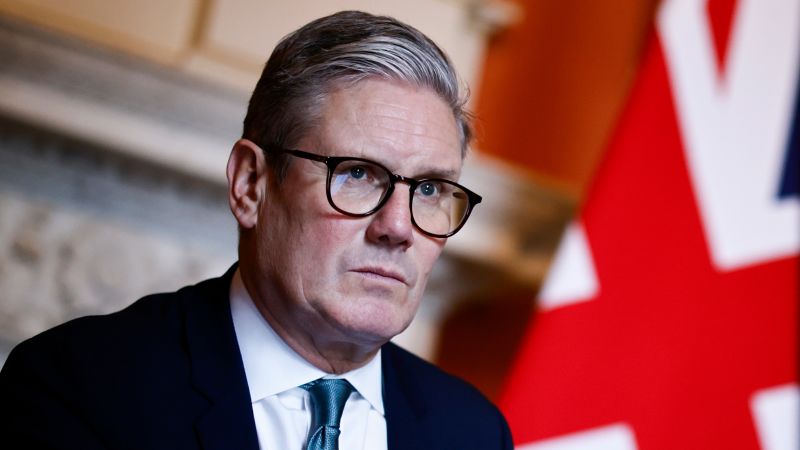
British Prime Minister Keir Starmer was never mixed up with Jeffrey Epstein but is in grave peril of losing his job because of him.
President Donald Trump however — whose name appears in some investigative files about the disgraced financier — has no such concerns.
While the political crisis deepens on the eastern side of the Atlantic, victims of Epstein are fighting inertia in Washington as they seek justice.
This discrepancy reflects the relative political strength of Trump and the possibly existential weakness of Starmer.
It shows that while British political institutions dedicated to accountability and investigation are functioning, Trump’s control of the Justice Department and his stranglehold on the Republican Congress spares him from critical scrutiny.
But above all, the global tentacles of the Epstein files — also now reaching into Norway and Poland — underscore the massive footprint of a scandal that continues to spread nearly seven years after its progenitor died.
It’s not just Starmer who is feeling the heat.
Public outrage over ties to Epstein is so acute in the United Kingdom that King Charles III has stripped his own brother and Epstein pal, the ex-Prince Andrew, of royal titles and forced him out of his lodge of the Windsor Castle estate.
There’s been no equivalent defenestration in the United States for anyone who has links with Epstein, who investigators ruled died by suicide in prison in 2019 before facing trial for sex trafficking and abuse of underage girls.
The most high-profile figure to face reprisals over his friendship with Epstein may be former Treasury Secretary Larry Summers. The one-time president of Harvard University stepped back from public commitments last year saying he was “deeply ashamed” after emails with Epstein showed him making sexist remarks and asking for romantic advice.
And on Wednesday, Brad Karp, the chairman of Paul Weiss, one of the country’s most prominent corporate law firms, abruptly resigned from his post after newly released Epstein files revealed his email exchanges with the convicted sex offender.
Karp had maintained communications with Epstein as recently as 2019, the year Epstein died. Karp will continue to work at the firm.
A spokesperson for the firm said in a statement earlier this week that Karp “never witnessed or participated in any misconduct. Mr. Karp attended two group dinners in New York City and had a small number of social interactions by email, all of which he regrets.”
Trump meanwhile is making his latest bid to put the furor behind him after the DOJ insisted there will be no further prosecutions.
There is no evidence of any wrongdoing by Trump, and authorities have not laid charges against him or anyone else mentioned in the newly released files.
While some of the references to Trump in the Epstein files are benign, others include newly disclosed unverified sexual assault claims against him as well as fresh details about how some of Epstein’s victims described their interactions with the future president.
But Trump told CNN’s Kaitlan Collins this week, “It’s really time for the country to get onto something else.”
How Starmer must wish that could be the case in the UK.
His premiership hung by a thread Thursday morning after a revolt by MPs in his Labour Party further damaged a 10 Downing Street operation staggering from crisis to crisis.
The prime minister was forced to admit during a fiery Question Time session on Wednesday that he knew about the friendship between former Cabinet minister Peter Mandelson and Epstein — but still made him ambassador to Washington.

Starmer fired Mandelson last year after an earlier release of Epstein files that showed he continued to support his friend even after he was convicted for sex offenses in Florida in 2008.
But the scandal revived this week after newly disclosed files suggested Mandelson may have leaked secret and market-moving information to Epstein at the height of the 2008 financial crisis. This would have been priceless data for Epstein and his Wall Street crowd. Mandelson is now facing a criminal probe and has resigned from the House of Lords and Labour.
“Mandelson betrayed our country, our parliament and my party,” Starmer told parliament.
The former ambassador to Washington apologized for his relationship with Epstein in a statement sent to the BBC last month.
“I was wrong to believe him following his conviction and to continue my association with him afterwards. I apologize unequivocally for doing so to the women and girls who suffered,” Mandelson said.
He said this week that he resigned from the Labour Party to spare it “further embarrassment.”
But Starmer’s fury doesn’t really explain why the Epstein fallout seems to be more severe in Britain than in Washington, where the files were released.
The explanation is that, in many ways, the storm raging in Britain is not directly about Epstein and his alleged trafficking and abuse of young girls. It’s instead a scandalous thread that is exacerbating a trio of long-running melodramas that already dominate British politics and media and public life.
This is a tale of a Prime Minister already on borrowed political time less than two years after winning a landslide election victory. His excruciating display in parliament on Wednesday hardened the narrative of a leader on the brink and boosted speculation about a challenge to his leadership from within the Labour Party.
It can be hard in Washington, where presidents serve fixed terms, to appreciate the pressure on British prime ministers.
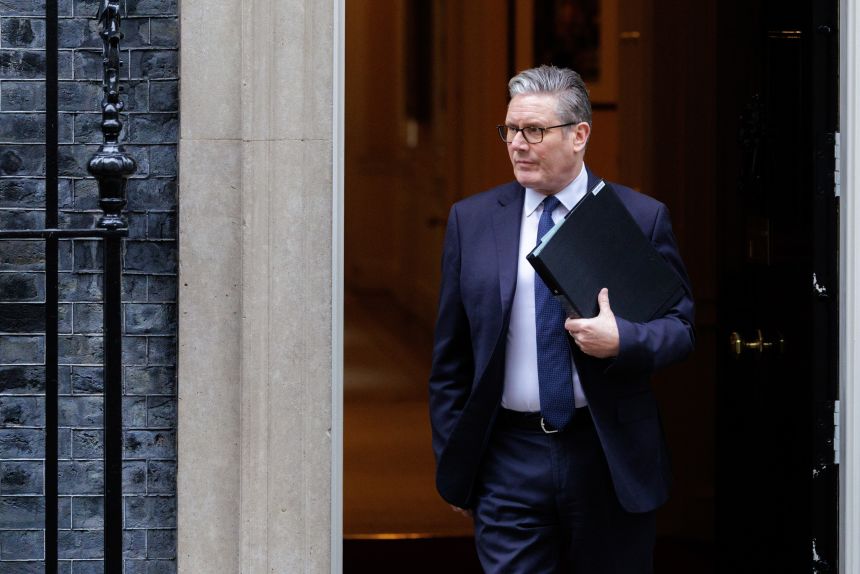
As soon as a new leader enters the famous black door in Downing Street, speculation mounts in the feverish Westminster Village about how long they will last. This mania — and behind-the-scenes plotting that haunts all PMs — has become even more intense over 11 years of turmoil in which a nation once known for political stability has burned through five prime ministers before Starmer.
The Epstein saga is also the latest twist of the 30-year political tragedy of the disaster-prone Mandelson, a politician with consummate skills whose nickname, the “Prince of Darkness,” reflects his contemporaries’ admiration but also his spectacular downfalls during previous Labour governments.
Mandelson, along with future prime ministers Tony Blair and Gordon Brown, made the sad-sack Labour Party electable again during the 1990s. They drove it to the political center with a more moderate brand of politics after huge shellackings by the Conservative Party under Margaret Thatcher and John Major. But the journey exposed Mandelson’s fatal flaw — a craving to be among the rich, famous and well connected — which triggered scandals that caused several resignations from the Cabinet and would eventually lead to his cursed friendship with Epstein.
The third consequence of the Epstein saga is a new chapter in Britain’s perennial drama over the royal family. The story of the now Andrew Mountbatten-Windsor’s friendship with Epstein has been making sordid headlines for years — not least because of his own falsehoods. The settlement Andrew made with the late Virginia Guiffre, who was trafficked by Epstein and accused the former prince of abuse, was the final straw for many Britons, although he made no admission of liability or guilt.
Mountbatten-Windsor’s unpopularity reopened a debate into the gilded lifestyle of the royals, especially those further away from the line of succession. The need to protect the institution helps explain the ruthless damage control that deprived Andrew of his titles and his banishment to spartan quarters on the King’s Sandringham estate in the countryside.
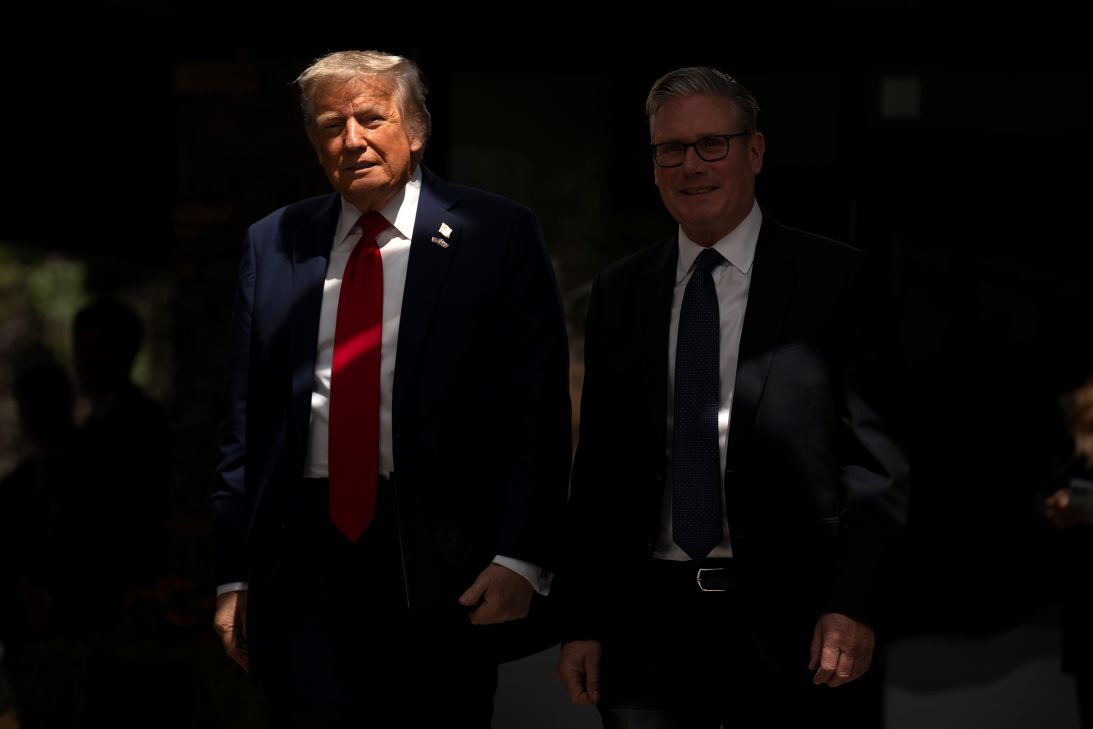
So far, the twists and turns over Epstein have not had an existential impact on Trump. The president hasn’t been accused of any crimes — even if his past relationship with Epstein raises doubts about his choice of friends.
And while he’s not as politically strong as he once was, Trump is not so vulnerable that there’s any chance of him being turfed out of the Oval Office. Starmer’s plight is much more severe.
Trump seems almost immune from political damage on the character question at this point. And the Epstein affair is only one of multiple constantly swirling political crises and outrages in Trump’s America — from his immigration crackdown in Minnesota that killed two protestors to his new attempts this week to undermine public faith in the electoral system ahead of midterm voting.
Trump’s technique is to flood the zone with so much noise that individual threats to his political standing cannot be heard above the cacophony.
And the president doesn’t have to face a bear pit of baying lawmakers like the one that further wounded Starmer at Prime Minister’s Questions. Often, when he’s asked about Epstein — especially by a female reporter like CNN’s Kaitlan Collins this week — he erupts.
By contrast, Trump has turned the Republican Congress into a tame rubber stamp.
True, the Epstein files are only being released because of a revolt by congressional Republicans who felt heat from the base. But there are few signs that unique political moment can be recreated — especially since Trump can wield leverage over GOP members facing tough primaries.
And the Republican House leadership is hardly holding the administration’s feet to the fire. House Oversight Chairman James Comer has succeeded in forcing former President Bill Clinton and former Secretary of State Hillary Clinton to agree to testify under subpoena. But he’s got no wish to summon Trump.
There is no evidence of criminal wrongdoing by Clinton in relation to the Epstein case, and the former president has denied knowledge of any of his crimes.
Trump said Tuesday he feels “badly” that the Clintons should have to go through the ordeal of testifying.
But his surprising empathy probably doesn’t represent a sudden thawing in his relationship with the former president and his vanquished 2016 general election foe. Trump might instead be intuiting that the Clintons’ testimony will ignite yet another sequel in a scandal he can’t make go away.
This story has been updated with additional information.