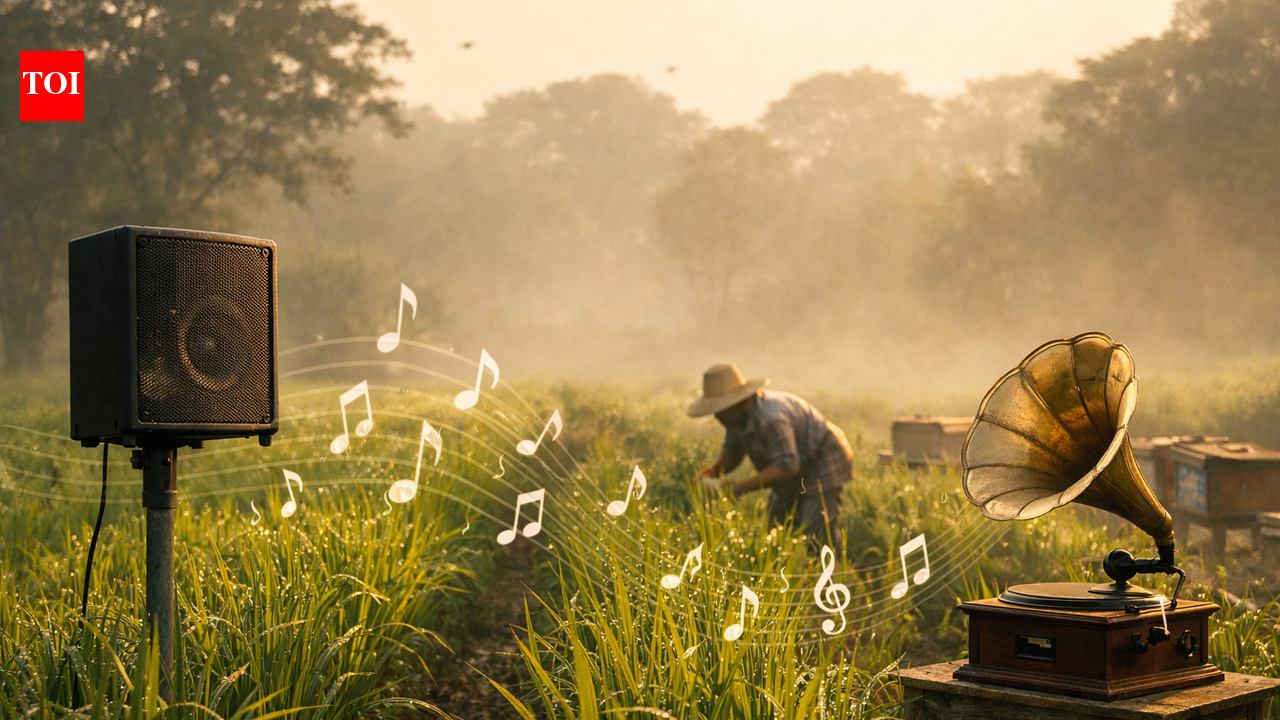
Across farms in different parts of the world, sound is becoming part of the growing routine. Loudspeakers are appearing between rows of crops, playing everything from classical music to low, steady tones meant to imitate insects or wind. Farmers say they are testing whether these sounds can make plants stronger, greener, or more productive. Some claim small but noticeable improvements after weeks of exposure.What once sounded like folk belief is now attracting cautious scientific interest. Universities and researchers are running controlled trials to see whether sound vibrations affect plant processes such as growth, water movement, or stress tolerance. The findings are still mixed, but the question itself is gaining attention: can crops respond to sound in measurable ways? Scroll down to find out.
What it looks like in the fields
In parts of India, Japan, and Europe, some farmers now plan music sessions much like irrigation cycles. Speakers are fixed to poles across fields. Tracks play at dawn or dusk. The styles range widely from Hindustani classical and violin solos to temple bells and low ambient tones meant to resemble insects.Many growers say they notice:• Faster germination• Thicker stalks• More flowering• Reduced pest pressure
The science behind sound and plants
Long before Bluetooth speakers reached farmlands, scientists were already wondering how plants respond to vibration. In the early 20th century, Jagadish Chandra Bose demonstrated that plants produce tiny electrical signals when touched, shaken, or stressed, suggesting they are far more sensitive to their environment than once believed.More recent lab studies have explored how sound waves, essentially pressure vibrations moving through air, might influence plant cells. Researchers have observed that certain frequencies can:• Stimulate root growth• Alter gene expression related to stress responses• Change how quickly seedlings elongate• Affect the opening of stomata (tiny pores that regulate gas exchange)Some experiments even show plants reacting differently to caterpillar chewing sounds versus wind, triggering chemical defences before serious damage occurs.
What happens inside a greenhouse
Controlled experiments look very different from musical farms. Instead of playlists, scientists usually expose plants to one specific sound frequency at a set volume for a fixed number of hours each day. Two identical groups are grown side by side under the same light, water, and soil conditions; the only difference is sound.
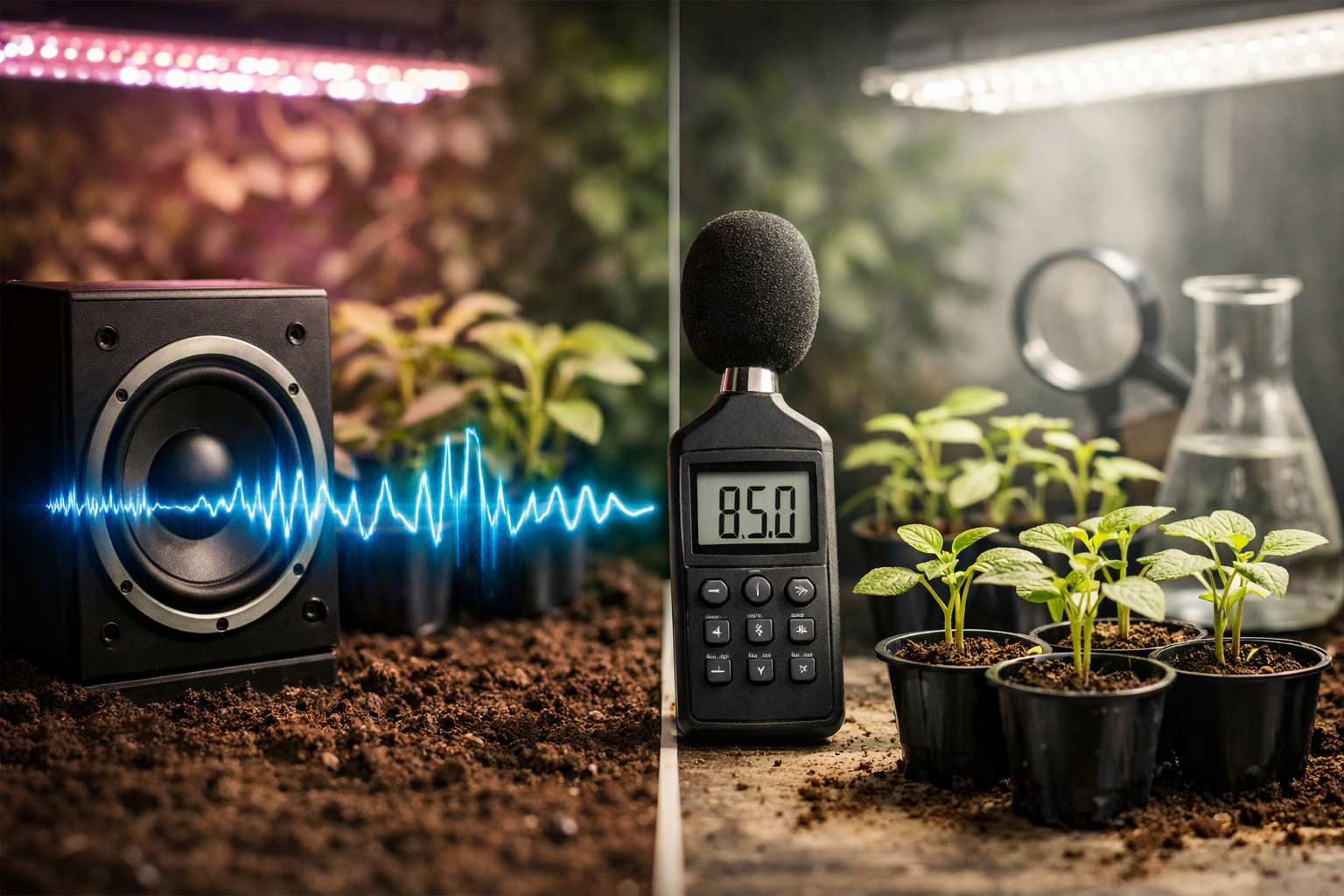
Results have been mixed. In some trials, seedlings exposed to gentle low-frequency vibrations grew taller or developed stronger root systems. In others, researchers saw little to no change. A few studies even showed that loud or irregular noise slowed growth, hinting that plants may respond best only within narrow acoustic “sweet spots”.Because of these uneven findings, scientists choose their words carefully. They don’t call music a miracle treatment. Instead, they describe sound as one factor worth investigating, much like airflow or the color of light, something that might influence growth, but only under the right conditions.
Why farmers keep trying anyway
Agriculture has always mixed tradition with trial and error. Farmers try new seed varieties, adjust irrigation schedules, and test sprays suggested by neighbours. Playing music in fields feels like another low-risk experiment, one that costs little more than electricity and curiosity.There may also be a human factor involved. Working in fields filled with soft sounds can make long days feel calmer, and farmers often say they pay closer attention to their crops in these settings. That extra care alone can sometimes lead to better decisions about watering, pruning, or pest control.Sustainability adds another layer to the interest. With fertiliser prices climbing and chemical use under scrutiny, growers are keen to explore gentle, non-invasive methods that might give yields a small boost without putting extra pressure on the soil or environment.
So… does music really make crops grow better?
The honest answer is cautious: sometimes, under specific conditions, sound appears to make a difference.Laboratory studies suggest that vibrations can influence plant processes, and a few small field trials have reported positive effects. However, results vary widely from crop to crop and setup to setup, and no single type of music or sound has been proven to reliably improve harvests at scale.

Plants don’t experience music the way humans do; they don’t recognise tunes or rhythms. What they may be reacting to instead are the physical vibrations themselves: tiny movements that travel through air and plant tissue, subtly affecting cells, membranes, and internal fluids.In other words, it’s less Mozart and more physics. Even so, the image of a rice field humming with violin notes has captured imaginations around the world. It sits at a fascinating crossroads, where long-held intuition meets modern sensors and laboratory tools. For now, music in the fields remains an intriguing experiment rather than a farming breakthrough. But as research into plant acoustics grows, farmers may one day adjust sound exposure as carefully as irrigation schedules, using vibrations not to perform for their crops but to gently influence how they grow.