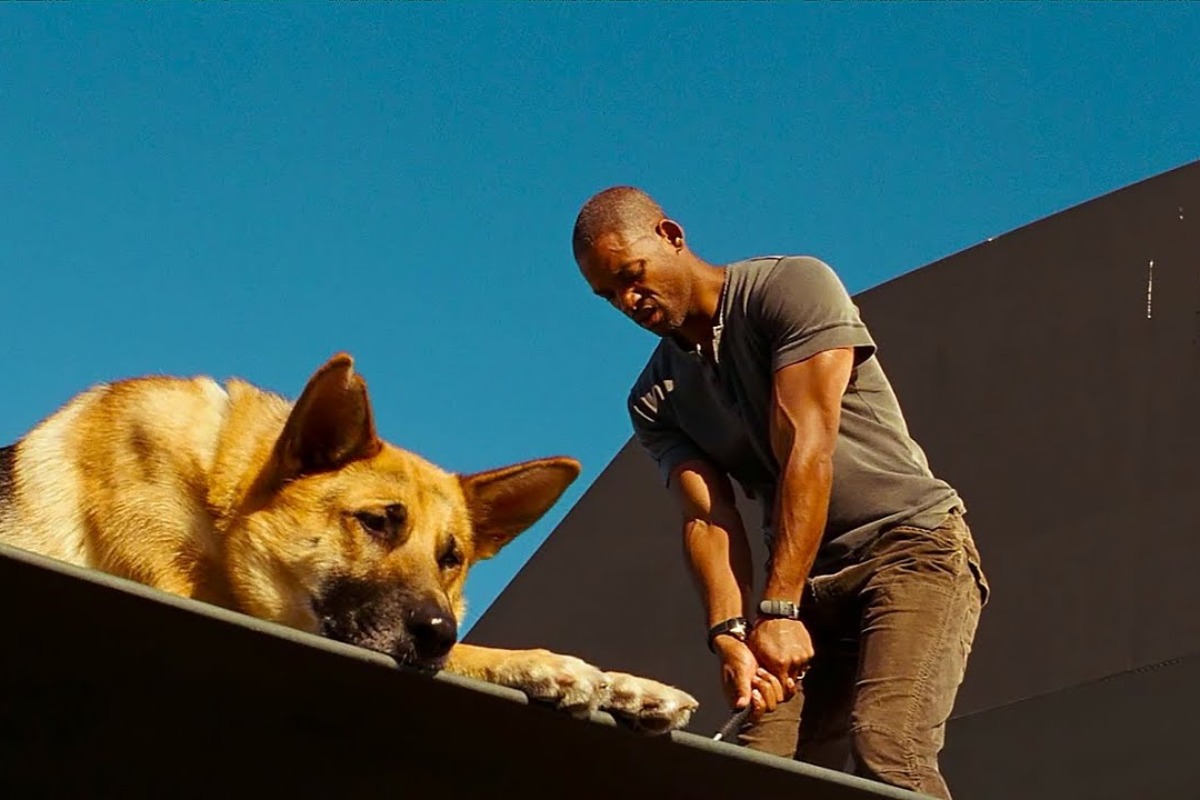
How does a box office smash become the only Will Smith movie to get booed? His answer points to an ending audiences never saw coming, or, for a time, never saw at all.
On Drink Champs in 2025, Will Smith explained how a single creative pivot turned I Am Legend into the work that drew the sharpest criticism of his career. The novel-faithful ending tested with audiences, was rejected, and got replaced by a more tragic finale just six weeks before the 2007 release. His account contrasts the theatrical cut’s self-sacrifice with the original version, where Dr. Robert Neville survives, confronts his own monstrous image, and frees the infected leader he had imprisoned. With a sequel taking shape with Michael B. Jordan and writer Akiva Goldsman, that fork in the road is again in focus.
A controversial revelation
Will Smith has worn many masks on screen, but few sparked as much postscript as “I Am Legend.” Speaking on the Drink Champs podcast in April 2025, he revisited the film’s fraught finale. Test screenings for the original ending drew the only chorus of booed reactions of his career, he said, triggering a dramatic pivot just 6 weeks before release.
The legacy of a blockbuster
Directed by Francis Lawrence, “I Am Legend” cemented Smith’s drawing power with a thunderous $585.4 million global haul. The film’s desolate New York, prowled by infected nocturnal hunters, framed Dr. Robert Neville’s lonely routine of survival and research. Commercial triumph aside, its last act has never quite settled, lingering as a cultural aftertaste fans still debate.
What went wrong with the original ending
The first cut hewed closely to Richard Matheson’s 1954 novel. Neville realizes the infected see him as the threat; the apex of his arc is self-recognition, not gunfire. That introspection landed with a thud. According to Smith, audience feedback was unforgiving, so the studio replaced it with a tragic, heroic exit calibrated to expectations—and shelved the book-faithful version just weeks out.
Comparing both endings
In the discarded finale, Neville releases the creatures’ leader, acknowledging their social bonds and ending his experiments as an act of moral repair. The theatrical cut flips the tone: a blaze of action and self-sacrifice, a gesture engineered to reassure viewers that humanity still has its champion. Which version lingers longer after the credits?
- The original reframed the infected as “sentient”, spotlighting Neville’s culpability.
- The released cut favored “heroism”, preserving a classic man-against-monsters arc.
Looking ahead with the sequel
Now, “I Am Legend 2” is in active development, with Smith returning alongside Michael B. Jordan. Screenwriter Akiva Goldsman has signaled a course correction toward the novel’s thornier themes (and past reports suggest the sequel follows the version where Neville survives). Fans sense an opportunity: restore the story’s moral symmetry without losing the pulse of large-scale spectacle.
If the first film taught Hollywood anything, it’s that endings carry weight well beyond opening weekend. A braver, more nuanced coda could honor Matheson’s DNA while letting Smith re-inhabit Neville as something rarer than a savior—a survivor learning, at last, to live with what he changed.