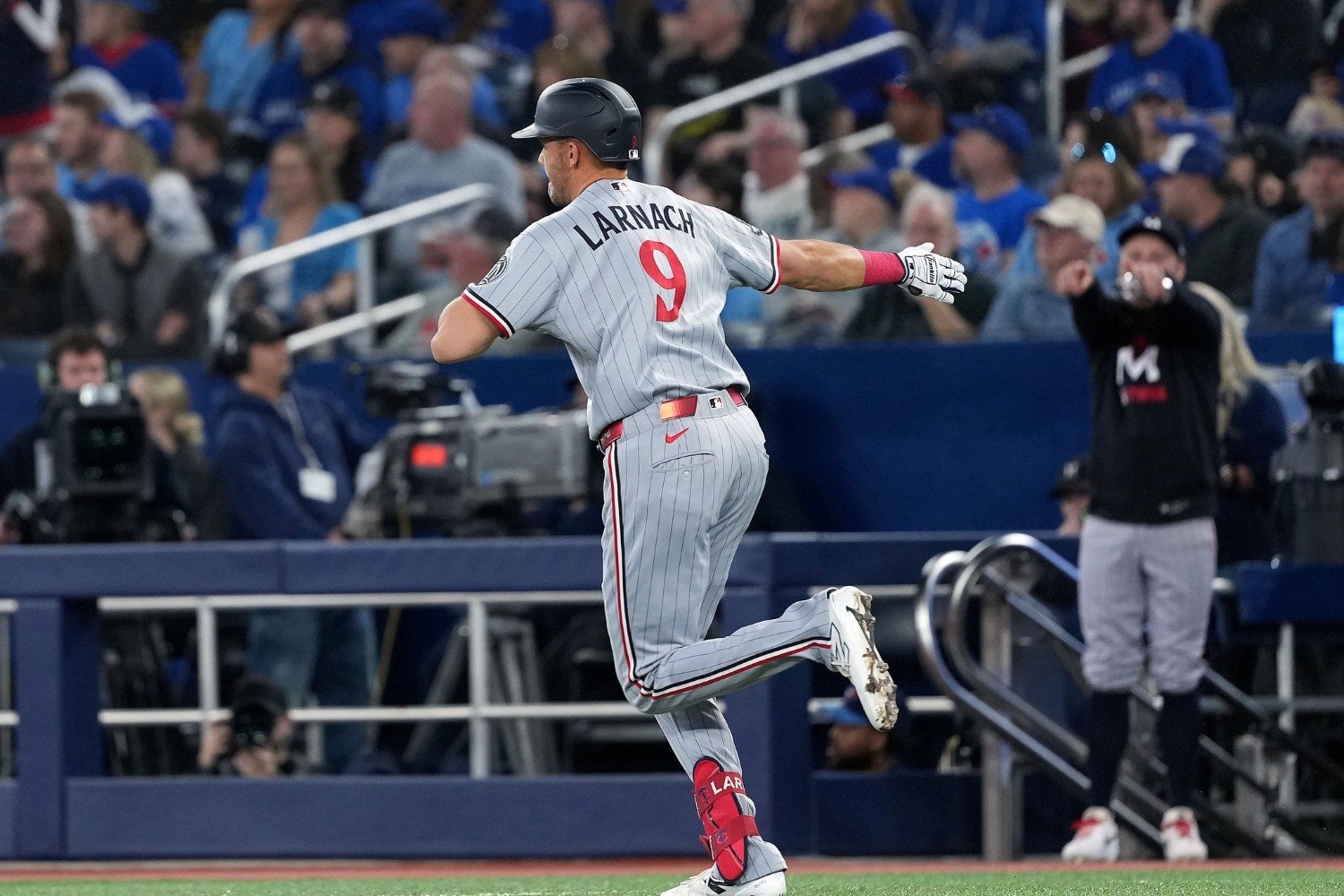
Amid the rollercoaster of developments those who follow the Minnesota Twins have been forced to endure since the 2023 ALDS Game 4 loss to the Houston Astros, one narrative has remained constant: Minnesota has too many left-handed-hitting corner outfielders. From former president of baseball operations Derek Falvey refusing to part ways with Max Kepler when Matt Wallner, Alex Kirilloff, and Trevor Larnach were perceived to be on the cusp of becoming full-time major-league contributors to new top executive Jeremy Zoll opting to roster Larnach (whom many view the same way they saw Kepler years ago) and James Outman over an inexperienced, higher-upside bat in Alan Roden or top prospects Emmanuel Rodriguez and Walker Jenkins, navigating a conversation about the team feels like wading hip-deep through a bog full of lefty outfielders.
| Rank | Team | LHH cOFs |
| 1 | New York Mets | 9 |
| 2 | Chicago White Sox | 8 |
| 2 | Cleveland Guardians | 8 |
| 2 | Tampa Bay Rays | 8 |
| 5 | Baltimore Orioles | 7 |
| 5 | Boston Red Sox | 7 |
| 5 | Houston Astros | 7 |
| 5 | Kansas City Royals | 7 |
| 5 | Minnesota Twins | 7 |
| 5 | Texas Rangers | 7 |
| 5 | Toronto Blue Jays | 7 |
| 5 | St. Louis Cardinals | 7 |
| 13 | Detroit Tigers | 6 |
| 13 | New York Yankees | 6 |
| 13 | Seattle Mariners | 6 |
| 13 | Colorado Rockies | 6 |
| 13 | Milwaukee Brewers | 6 |
| 18 |
West Sacramento Athletics |
5 |
| 18 | Los Angeles Angels | 5 |
| 18 | Los Angeles Dodgers | 5 |
| 18 | Miami Marlins | 5 |
| 18 | San Diego Padres | 5 |
| 18 | San Francisco Giants | 5 |
| 18 | Washington Nationals | 5 |
| 25 | Arizona Diamondbacks | 4 |
| 25 |
Atlanta Braves |
4 |
| 27 | Chicago Cubs | 3 |
| 27 | Cincinnati Reds | 3 |
| 27 | Pittsburgh Pirates | 3 |
| 30 | Philadelphia Phillies | 2 |
Given how much attention this narrative has received within Twins Territory, it’s unsurprising to see that the Twins are toward the top of the league. As mentioned earlier, though, they keep good company, tied with seven other organizations for fifth place and one left-handed-hitting corner outfield subtraction away from tying for 13th with the Tigers, Yankees, Mariners, Rockies, and Brewers.
With some of the best and worst organizations residing at both ends of the spectrum, it becomes clear there is no simple correlation between the number of left-handed hitting corner outfielders an organization rosters in the majors and Triple A and success on the field. Instead—and this will shock you, dear reader—it’s the quality of left-handed-hitting corner outfielders an organization has and how they deploy them that matters most. You could do this math differently by counting (or not) switch-hitters, first basemen and designated hitters, and those are part of the narrative where the Twins are concerned, to be sure. Still, this implies some fans have made too much of the perceived roster imbalance over the last year or three.
Outman has been utilized so sparingly that his not yet generating a hit over 15 plate appearances while striking out at a 53.3% rate has been inconsequential. Roden is more deserving of a 26-man roster spot than Outman. Given the minimized role he would have with the major-league club, however, it makes more sense for the optionless Outman to occupy this very minimal role than Roden, particularly this early in the season. Again, Minnesota has a high number of left-handed hitting corner outfielders between the majors and Triple-A, in relation to the rest of the league. Still, it’s not an excessive amount whatsoever, with the club’s current corner outfield tandem (Wallner and Larnach) being primary contributors to the lineup’s early-season success at the plate.