Washington
President Donald Trump just can’t get what he wants from the Federal Reserve.
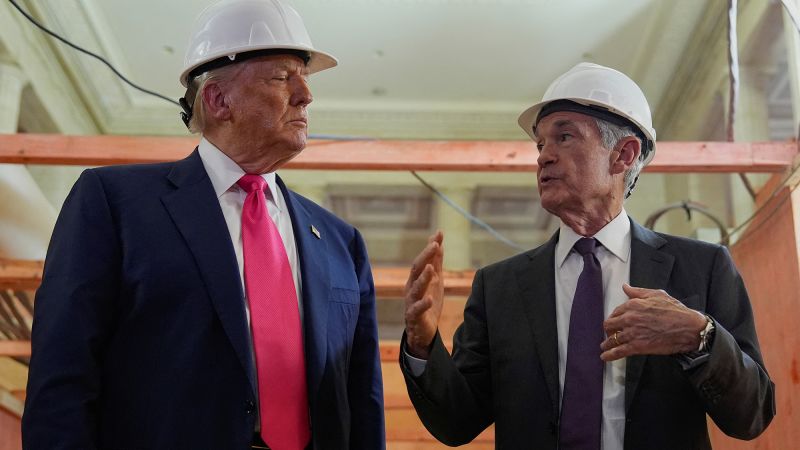
Trump has long pounded the table for rate cuts and has wanted Fed Chair Jerome Powell out for years. But Trump’s own actions over the past year have made those two outcomes far less likely.
Trump…
-
introduced a slew of massive tariffs, pushing up inflation.
-
went to war with Iran, spiking energy prices worldwide.
-
publicly backed a criminal probe into Powell that a federal judge has described as “pretextual.”
-
threatened to fire Powell next month if he doesn’t step aside when his stint as Fed chair ends.
-
is trying to fire Fed Governor Lisa Cook over unsubstantiated allegations.
Now, there’s a growing chance that the US central bank may not just delay a rate cut but may hike rates instead, particularly if the price spikes stemming from the US-Israeli war with Iran prove to be long lasting.
Trump’s efforts throughout his second term have only prompted central bankers to take pause and put any rate cuts on the back burner as they wait for things to play out — an approach that even Treasury Secretary Scott Bessent recently said he agrees with.
The president’s attacks and threats on Fed policymakers themselves are also backfiring.
For Fed officials to lower interest rates, they must be confident that inflation is slowing and is on track to their 2% goal. That had been the case right before Trump’s second term began last January.
Then Trump rolled out a confusing patchwork of tariffs last year that jacked up inflation on various goods (and he still isn’t done with his tariff spree, promising to raise duties across the board to get back to the effective tariff rate from before the Supreme Court’s ruling that struck down certain tariffs). That prompted Fed officials to adopt a wait-and-see posture, holding off on any rate moves until they delivered three consecutive cuts at the end of last year.


Fed officials are now more worried about the war that began with joint US-Israeli attacks on Iran in late February. The conflict has led to a weekslong closure of the Strait of Hormuz, a key global trade passage. About 20% of the world’s oil supply, along with other key commodities, passes through the critical waterway.
The war with Iran drove up monthly US inflation threefold in March, according to the latest Consumer Price Index report.
At the Fed’s March meeting, Powell had said the war’s effects would likely be temporary. Now, less than a month later, the world’s cargo ships still aren’t flowing freely through the strait and Fed officials aren’t considering interest rate cuts anytime soon.
“My baseline is that we’re going to remain on hold for a good while,” Cleveland Fed President Beth Hammack, one of the four regional Fed presidents with voting power this year, said Wednesday in an interview with CNBC.
So far, Trump’s efforts to push out Fed officials haven’t been successful, and ironically, they may keep Powell in place for longer.
Powell has resisted engaging with Trump over the president’s repeated threats to fire him, limiting his response to reminders that such a move would be illegal.
Firing Powell could have two serious consequences for Trump: doing so would not sit well with financial markets and the decision may get held up for a long time in the courts. Powell last month said the law dictates that the current Fed head remains in the role as chair “pro tempore” if the Senate hasn’t confirmed a successor by the end of his term.

“President Trump’s threats of firing Chair Powell are hardly surprising but are simply not consistent with what the law provides,” Skanda Amarnath, executive director at Employ America and a former economist at the Federal Reserve Bank of New York, said in a statement on Wednesday.
Last year, Trump and his allies seized on the Fed’s renovation to its headquarters in Washington, DC, to put pressure on Powell, claiming the cost overruns were evidence of mismanagement. The Fed explained that some of the higher costs were due to unforeseen issues, such as asbestos and a high water table.
But that didn’t stop DC US Attorney Jeanine Pirro from serving Powell a pair of subpoenas to investigate testimony he gave to Congress last over on the renovation. Powell revealed the investigation in an extraordinary video rebuke, calling it out as a “pretext” to pressure the Fed.
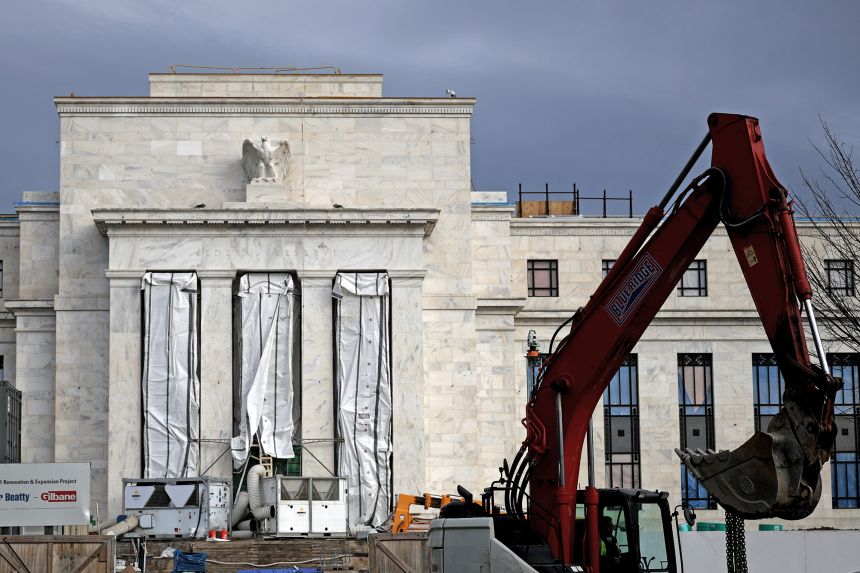
The courts have been siding with Powell. A federal judge last month quashed a pair of subpoenas served to Powell by Pirro’s office, later reaffirming that ruling after Pirro requested the judge reconsider. In a statement to CNN, Pirro signaled she has no intention of abandoning the investigation. Her office also confirmed to CNN that her deputies were denied access to the Fed’s headquarters earlier this week, after showing up unannounced in order to view the renovation project.
Pirro has said she plans to appeal to the DC Circuit of Appeals, but her insistence with continuing the probe is precisely what is stalling Trump’s nomination of Warsh: Sen. Thom Tillis of North Carolina, a senior Republican on the Senate Banking Committee, reiterated this week that he won’t vote to confirm Warsh unless the probe into Powell is dropped.
It also appears likely that the president will lose his Supreme Court case against Fed Governor Lisa Cook, whom he tried to fire in August over allegations that she committed mortgage fraud. The Justice Department has been investigating the allegations but still hasn’t announced any charges against Cook.
“The President already appears to be losing in court in his attempt to fire Governor Lisa Cook and he will likely lose again if he tries to fire Chair Powell,” Amarnath said.
In the end, Trump’s war on the Fed may end up costing him the very result he is demanding.