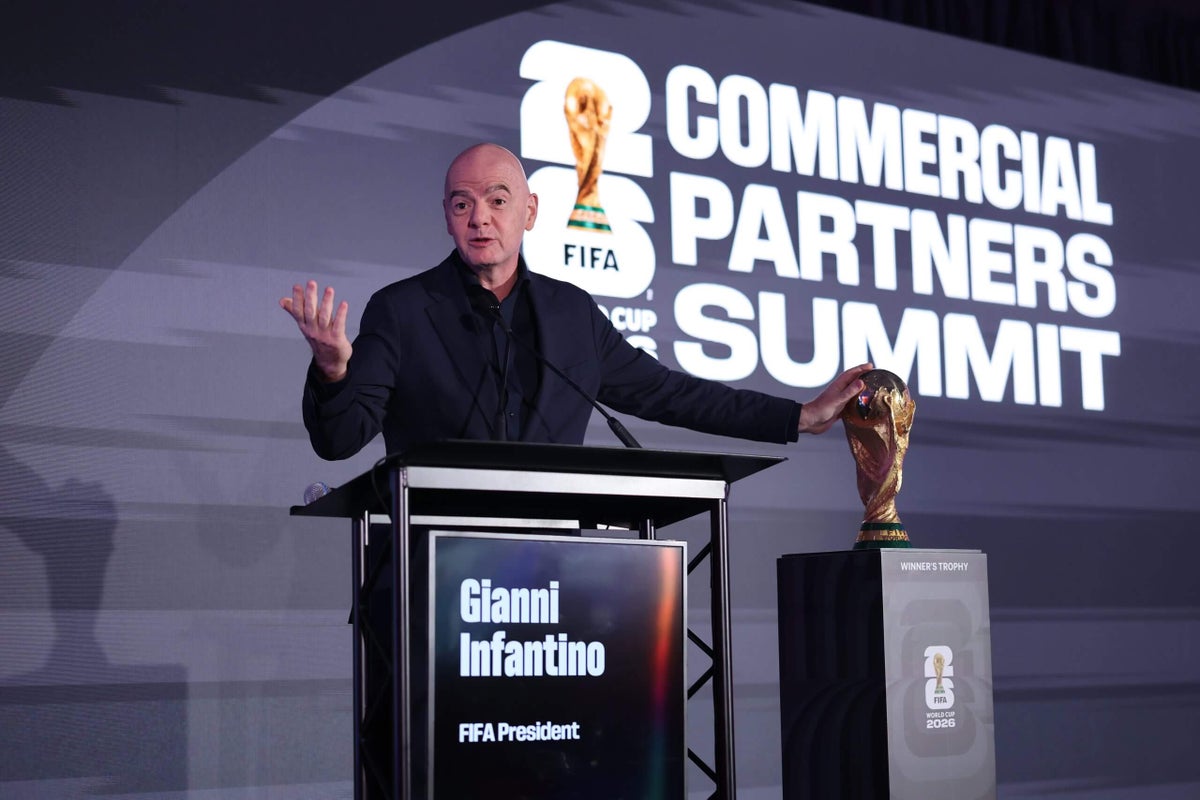
But with two months to go, the long-promised World Cup boom hasn’t yet materialized. Some in the U.S. tourism industry worry that it will turn out to be little more than a modest bump.
“It is not the cornucopia that FIFA talked about,” Vijay Dandapani, president and CEO of the Hotel Association of New York City, told The Athletic.
Chris Nassetta, longtime president and CEO of Hilton Hotels & Resorts, admitted at a conference in Washington, D.C., last week that “the World Cup, at this point, doesn’t look as strong as what we had hoped.”
Others remain bullish and expect travel bookings to pick up over the coming month. “We’re really not ready to pull the fire alarm yet,” Erik Hansen, the U.S. Travel Association’s head of government relations, told The Athletic.
Rosanna Maietta, president and CEO of the American Hotel and Lodging Association, added: “The industry, for sure, is still expecting to see a bump from those two months.”
She acknowledged, though, that “a lot of our members are reporting that bookings are below their projections.”
Many have re-calibrated expectations. And across the 16 host cities, most hotels have walked back their pricing surge.
In the aftermath of the World Cup draw and schedule reveal in December, The Athletic analyzed hotel prices in the 16 markets. The 96 hotels in our sample were, on average, charging $1,013 per night around the opening match in their respective cities, compared with $293 for an equivalent stay in late-May, exactly three weeks earlier. The average increase was 328%.
The extent of the surge varied from city to city, but touched every market and cohost country. In the U.S., the average per-night price rose from $315 in late May to $1,028 during the first week of the tournament.
Four months later, at the same hotels, prices for those same June dates have fallen more than 40% from their earlier peak.
They remain significantly higher than May prices, but across 63 of the 66 U.S. hotels in the sample, the average rate last week was $579 per night around opening World Cup matches, down from $1,034 four months ago. (Three hotels were removed from the sample because rates were no longer available on the Marriott and Hilton apps, from which the data was sourced, when this follow-up analysis was conducted last week.)
The relatively steep decline aligns with industry-wide data and comments from executives and analysts.
“We are re-adjusting based on the market,” Maietta said.
Nearly everyone interviewed for this story said they expect bookings to accelerate between now and the start of the World Cup, or even during the tournament, which kicks off June 11 and concludes July 19. “I am still anticipating a banner summer,” Ed Grose, president and CEO of the Greater Philadelphia Hotel Association, told The Athletic.
But the “soft bookings,” as Maeitta put it, are fueling some concern that this World Cup won’t attract as many visitors as first thought.
The posited reasons range from a broader U.S. tourism slump to ticket prices that have dissuaded foreign fans, plus costs — including the hotel prices themselves — that have made a World Cup trip unaffordable for the vast majority of the world.
Reasoning for unmet expectations
When FIFA last year released a “Socieconomic Impact Analysis” report and boasted that the World Cup “could help drive up to $40.9 billion in Gross Domestic Product (GDP)” in the U.S., its analysis included an assumption that “40% of the total stadium attendance [would] consist of foreign tourists.”
If so, more than 2.5 million seats at the World Cup’s 104 matches would be filled by foreigners. Separately, officials speculated that the number could be around 3 million. And simultaneously, they promised that millions more fans would come from afar without tickets to partake in World Cup-adjacent festivities. Infantino said last week that there would be “tens of millions from all over the world coming to the U.S. just to feel the vibe.”
With two months to go, however, bookings and ticket sales suggest that the World Cup, as a tourist attraction, might fall short of those expectations.
According to April 6 data provided to The Athletic by CoStar, a real estate and hospitality data firm, the percentage of available hotel rooms already booked for matchdays in nine of the 11 U.S. host cities was roughly equal to the percentage of rooms booked for the same June and July dates at the same point last year.
In those nine cities, excluding Philadelphia and Kansas City, bookings were up 0.8 percent on average. On group-stage dates, the uptick was slightly higher (1.3 percent). Including the two Canadian host cities, Vancouver and Toronto, however, there have been relatively fewer bookings this year compared to last.
Cities that aren’t typically summer tourist destinations, such as Dallas and Miami, have seen significant upticks, especially on the nights of popular matches, including England vs. Croatia and Scotland vs. Brazil.
Colombia vs. Portugal is another Miami example. Those matches “are going to bring a higher demand than maybe some of those earlier games, like Saudi Arabia, Cape Verde,” James D’Agostino, a general manager at Gale Hotels in Miami, told The Athletic.
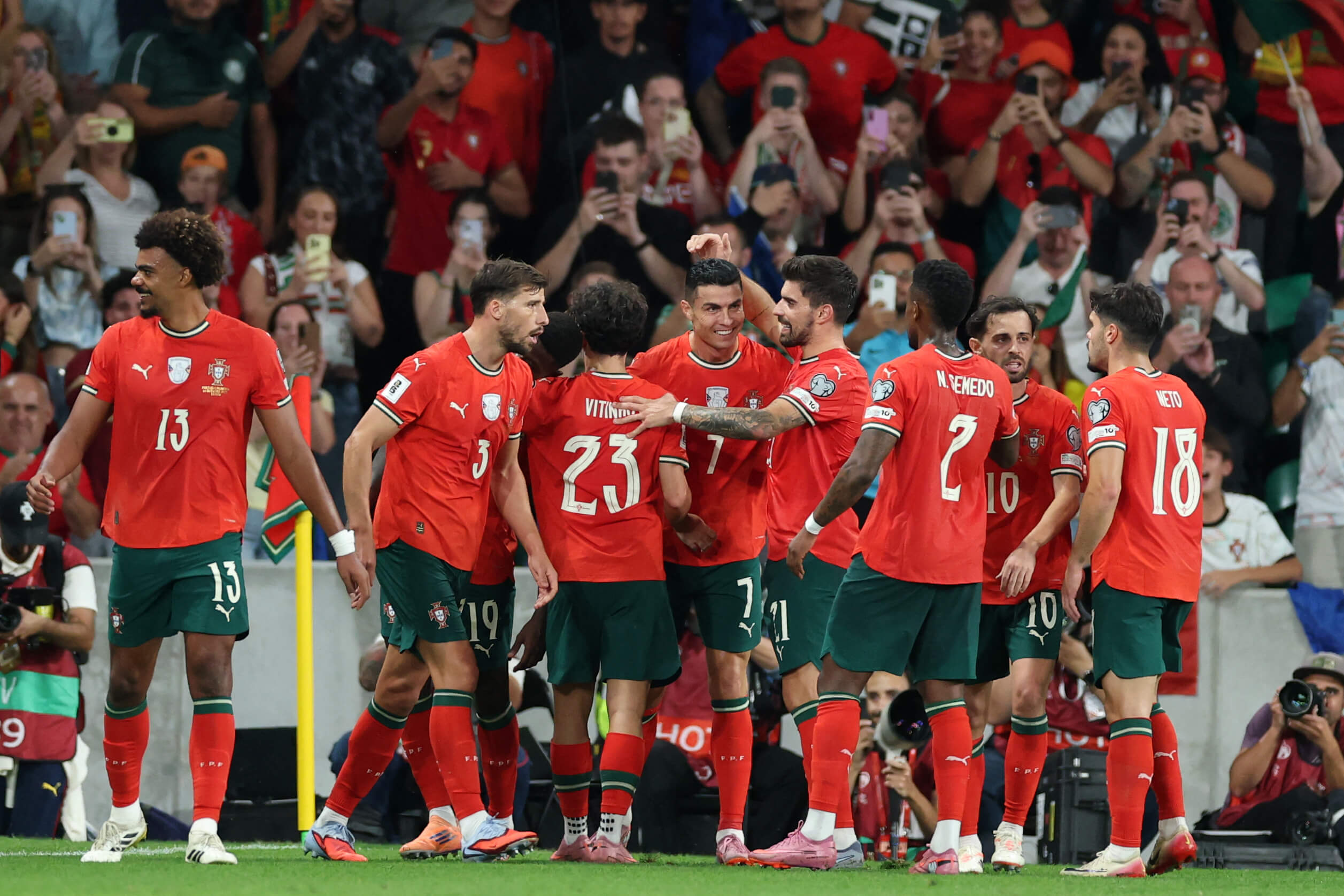
Cristiano Ronaldo and Portugal are expected to be a big draw for traveling fans at this summer’s World Cup (Patricia De Melo Moreira / AFP / Getty Images)
But for hotels in other cities that would welcome millions of tourists even without the World Cup, such as New York or San Francisco, the tournament has not yet had a noticeable impact.
“The pace, unfortunately, is the same as what it was last year,” Dandapani, the New York City hotel association executive, said.
Alex Bastian, who leads the Hotel Council of San Francisco, said that in the Bay Area, “many of the hotels adopted conservative budgeting and forecasting strategies” based on past World Cups — and then based on the 2026 match schedule announcement in December.
Levi’s Stadium in Santa Clara, Calif., near San Francisco, is the only of the 11 U.S. stadiums that won’t host a single top seed. “If Germany was at play or France was at play,” Bastian said, “that would be a different impact than, for example, a team like Switzerland, or a team like, I don’t know, Jordan.”
Even in cities that received stronger draws, the share of international ticket buyers seems to be falling short of the 40-50 percent projection. Noelle LeVeaux, the Dallas host committee’s chief marketing officer, said recently that about 26-35 percent of tickets are being purchased by international customers. FIFA data distributed to the Los Angeles host committee and seen by The Athletic suggests that, similarly, less than a third of the fans at L.A.’s matches might be coming from abroad.
Dandapani said that FIFA’s pricing of tickets “at a really extraordinarily high level compared to” the 2022 Qatar World Cup had deterred travelers. He also cited widespread “headwinds,” such as strict visa policies, that have “put a chill” on international travel to the United States.
President Donald Trump’s “America First” agenda and rhetoric has also fueled widespread perceptions that the country is unwelcoming. Throughout 2025, the first year of Trump’s second term, “U.S. visitor numbers declined 5.5% against 2024,” according to the World Travel and Tourism Council, even as the travel and tourism sector experienced its “best year ever” globally.
The World Cup had been among the reasons that industry analysts expected the U.S. to rebound in 2026. Tourism Economics, a global travel data company, initially projected a 3.9% increase in arrivals throughout the calendar year. But recently, citing the “Middle East conflict” and its economic consequences, the firm downgraded its projection to “a moderate 3.4% gain.”
Aran Ryan, the company’s director of industry studies, told The Athletic via email: “We estimate World Cup attendees will boost growth in U.S. arrivals this year by about 0.8 to 1.3 percentage points … equivalent to about 742,000 incremental visitors during the tournament.”
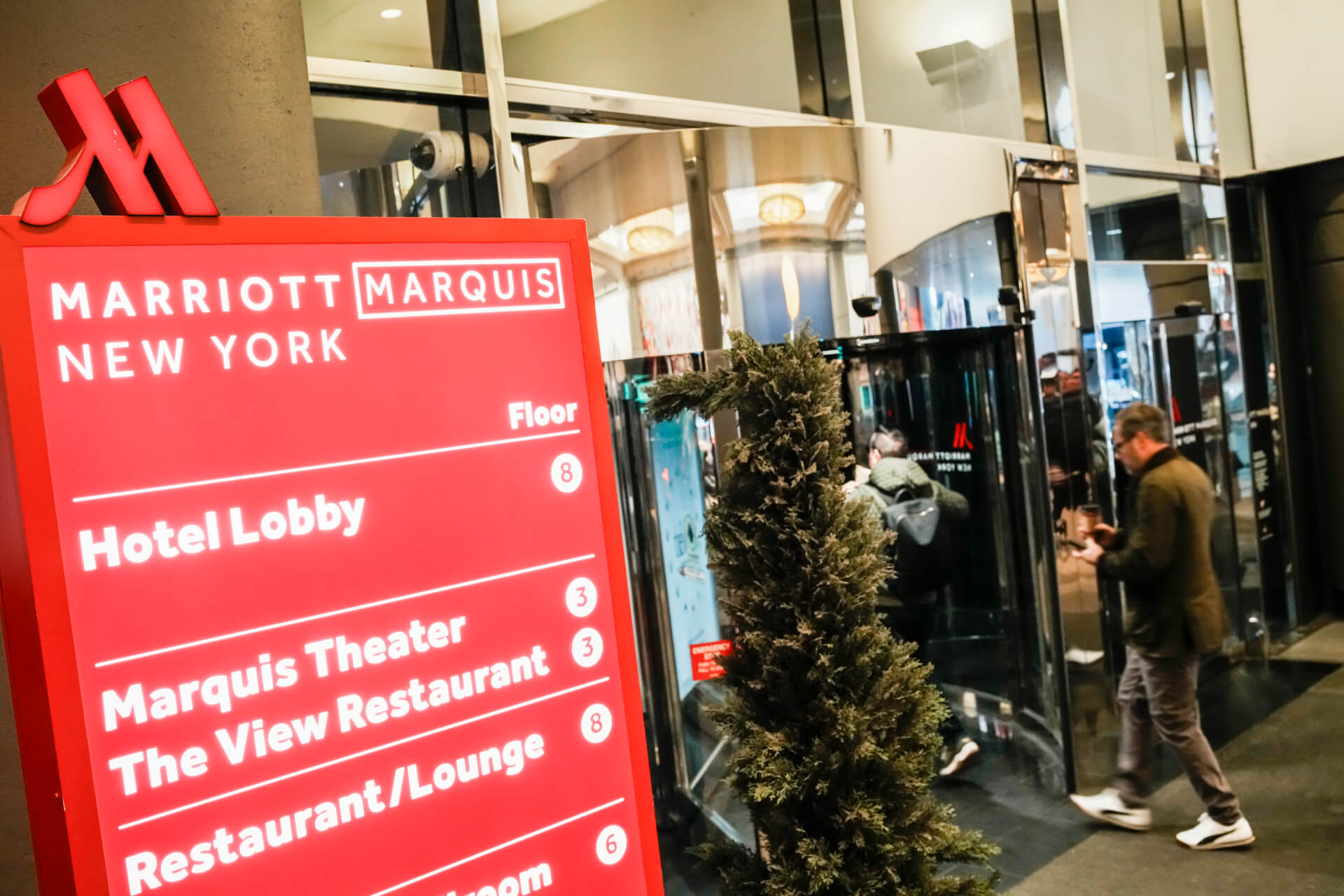
A view outside the Marriott Marquis hotel in midtown New York City (Zamek / VIEWpress)
‘Artificial early demand’
Pricing, meanwhile, was muddled by FIFA hotel blocks. The global soccer governing body, which owns and runs the World Cup, booked hundreds or thousands of rooms in each host city. Then, like many conventions and other event organizers, it exercised its contractual option to cancel some of those reservations earlier this year.
“FIFA’s room block overcommitment,” Maietta explained, “created artificial early demand.” Its opt-out then changed the supply-and-demand equation. Hotels suddenly had more rooms to sell, while potential visitors were perhaps not as numerous as expected.
So, throughout 2026, they’ve adjusted prices accordingly.
The steepest decline in our sample — which serves as a rough approximation of the market, far from an exact measure — occurred in Atlanta, where average prices from June 14-16 at the six randomly selected tourist hotels fell from $968 in December to $390 in April. (Atlanta’s slate of group-stage matches is arguably the second-most underwhelming of the 11 U.S. host cities, better than only the Bay Area.)
Boston, Philadelphia and Seattle also saw prices cut by around 50%.
The most modest decline was in Dallas, where the average of $1,039 recorded in December has fallen to a still-high $773 around the first match at AT&T Stadium in nearby Arlington, between the Netherlands and Japan. (England vs. Croatia is three days later.)
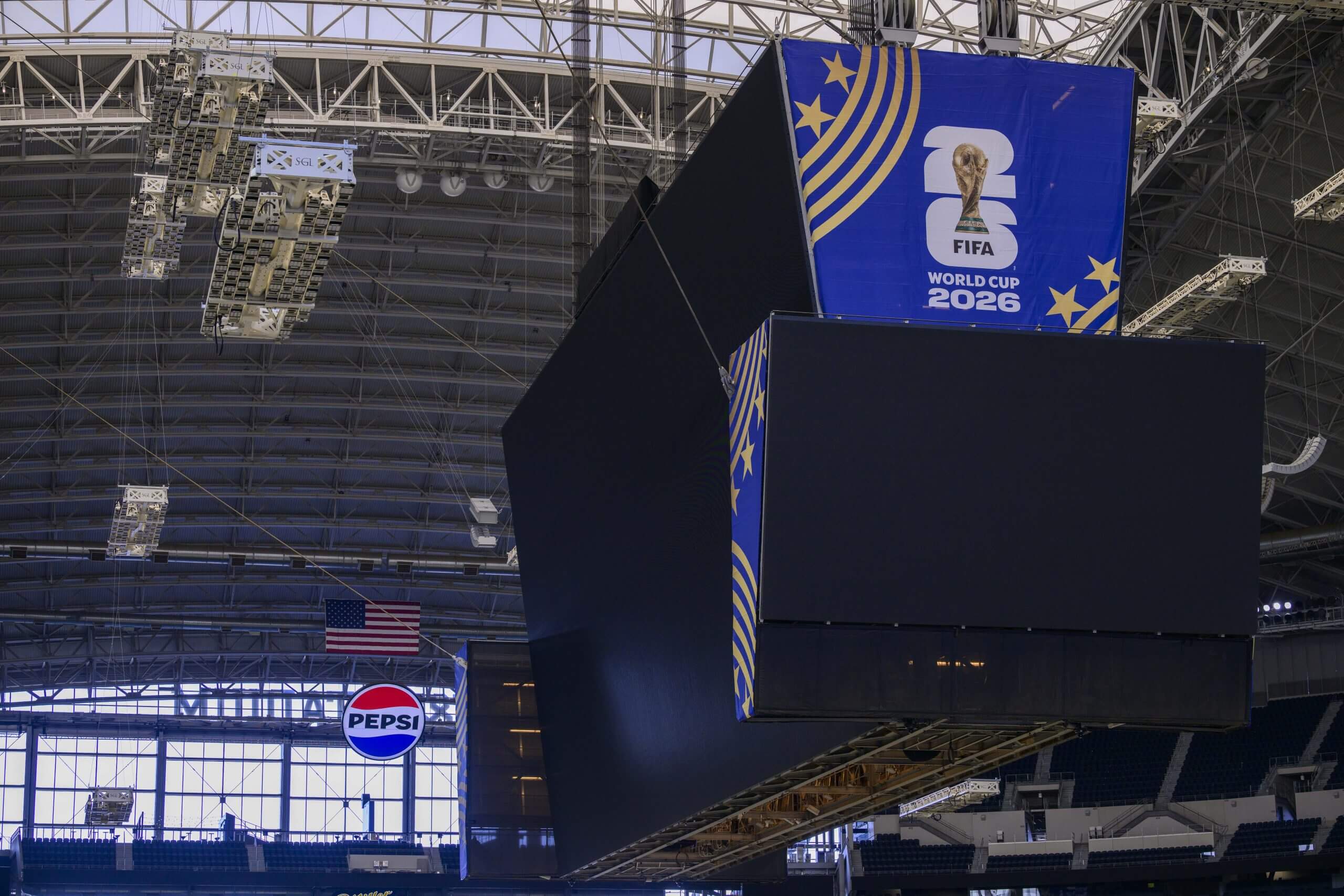
The giant video board at AT&T Stadium in Arlington, Texas, dons World Cup branding in anticipation of a number of key World Cup matches at the venue (Jerome Miron / Imagn Images)
Other entities, meanwhile, have been adding to the total cost of a World Cup trip. On top of hotels and tickets (whose prices FIFA raised again this month), transit agencies in New Jersey and Massachusetts have announced that matchday trains will cost $150 and $80, respectively. Alternatively, FIFA is charging over $100 for parking at most or all matches.
“If they’re nickel-and-dimed every which way along that travel journey,” Maietta said of fans, “it makes it really hard for them to want to come out with, say, a family, or spend that extra night at a hotel. … It all adds up.”
Optimists within the tourism industry note that the World Cup’s knockout rounds, which represent 31% of matches and the highest stakes, do not lend themselves to advanced travel planning. Many fans, they believe, will book at the very last minute if their team wins and progresses from one stage to the next.
There are also still more tickets to be distributed. FIFA said Tuesday that it has sold 5 million, and that a new batch will be made available Wednesday at 11 a.m. ET. (The cumulative capacity of World Cup stadiums across the 104 matches is roughly 6.7 million.)
The question is how significant the last-minute rush will be. No one is expecting the “tens of millions from all over the world” that Infantino mentioned, but the hope is that the World Cup will at least bring hundreds of thousands to each host city. And even if they are expats who travel from within the United States, they will still give the tournament international flair.
“I think it’s too early to tell,” Hansen said of the ultimate impact. “I think plans are starting to be made now to come to the U.S. Ticket demand has been strong. So I think we’re going to start to see, in the next couple of weeks, how the data’s shaping out.”
Adam Crafton contributed reporting to this story